
Chapter 4 is an account by Nebuchadnezzar of his own experiences,
and is his testimony to the Greatness of the True God to the world,
then and now. The testimony shows how God has overrulership, reversing events whenever neccessary, for the outworking of His benevolent purposes.
The Masoretic text places an end marker (פ) on 3:30, so the last three verses
of chapter 3 can also form a prologue to the testimony in chapter 4 and also point back to events in chapter 3.
Verses 1 and 2 of chapter 4 outline Nebuchadnezzar having a dream that greatly alarms him. A word that occurs only once in the Aramaic Biblical text, in verse 2, is interpreted as “foreboding imaginings”. This interpretation is based on researching various lexicons and associated resources. The Aramaic word carries connotations of “fata morgana” in the following video:
In verse 8 we have mention of the god Bel.
“(whose name, Belteshazzar, is like the name of my god)”.
Regarding Bel and Baal, both have near identical meanings and in particular “lord”. Bel became especially applied to Marduk in Babylon. So Nebuchadnezzar was brought up and steeped in his religion and conversely Daniel was surrounded by powerful influences which most of his peers would have difficulty resisting.
The inhabitants of Babylon were well conversant with depictions of transcendent beings often with wings as in the image of Marduk.
Some believe that the Bible is derived from these ancient legends.
Alternatively these legends are showing a common source of information that has been modified by various cultures. The most powerful gods are always given the attributes of the Most High God with the major exception that these gods also make the same mistakes that have plagued humanity for thousands of years. Here lies the difference between the Bible God and all others. God can help us escape the kingdom of darkness but the other gods are slaves to it and suffering the same consequences as the human race.
The Babylonian belief paradigm was centred mainly on the heavens exuding powers from the gods which were then equated to the sun, moon, stars and planets. The various spiritual personnel working directly for Nebuchadnezzar were responsible for charting and executing magic in various forms to channel these powers in their hope they could provide some benefit for the empire and the populace.
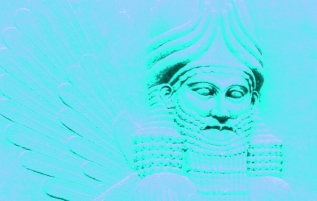
Regarding the “Watcher” of verse 13:-
One of Marduk’s names is “monitor of the gods” which is akin to “watcher”
The Aramaic word for “watcher” can also mean “wakeful one” and “guard”. 
Nebuchadnezzar recognized that the “Watcher” that he saw was inherently different from the ones he was familiar with and described him as “a Watcher, a Holy One”, thus indicating a difference.
Nebuchadnezzar’s change in thinking took several years and catastrophic events to catalyse.
Some noticeable things in chapter 4:
1. That the Most High has overrulership on Earth.
2. The Most High takes a personal interest in each individual.
3. The Most High had meticlulous interest in Nebuchadnezzar and his Babylonian realm, and we can map this into today’s environment.
Information sources for this page included:
Wikipaedia on mythology.