
Including comparisons from the natural world and history
3:1-7
Nebuchadnezzar sets up a gold image in the proportional dimensions of an obelisk, and as tall as an 8-story building of 33 metres. There are various theories regarding what the image was, but we know that it was gold from top to bottom. No doubt Nebuchadnezzar had been deeply affected by the vision in chapter 2, but here he was still following his traditional gods. He creates an all-gold image to strengthen his empire and control religion.
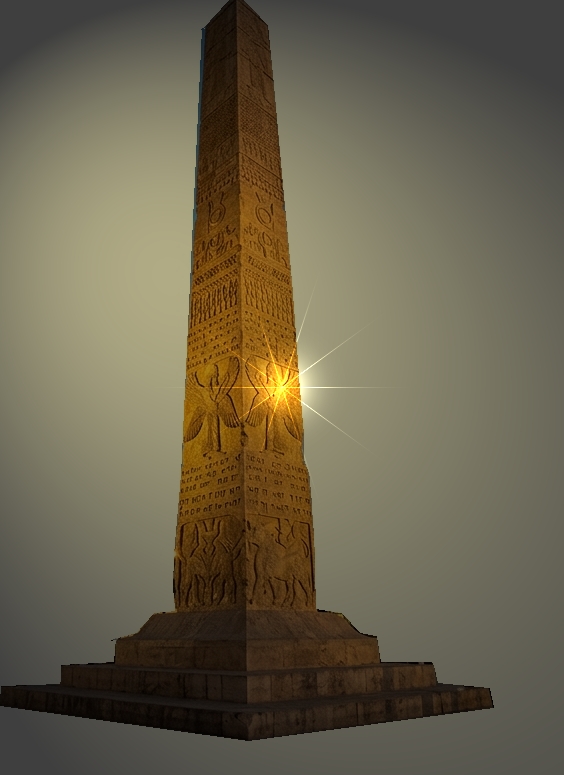
Perhaps Nebuchadnezzar was about to show the nations how extremely powerful someone is on earth who controls such wealth! Worshipping the gold obelisk, in his thinking, may have added something good to the human psyche.
A square obelisk (based on the Assyrian style) of the same dimensions would weigh somewhere around 6000 metric tons. In today’s money, that would be approximately US$800 billion.
God is gracious to Nebuchadnezzar regarding the gold structure, since engineering calculations for a gold image of those dimensions would make it structurally unstable. Within a few months to a year, it would have become pear-shaped at the base. Cracks would have appeared on its smooth surface due to the extreme pressure of the gold upon itself. Any major weather event would have toppled it. After the furnace episode in the narrative, Nebuchadnezzar had a change of mind regarding the presence and importance of the image.
Now let us see what precious metals exist just in our cosmic neighborhood:
The Music
The majority of the musical instruments specified in verse 5, according to the text, are identifiable from the Persian and Greek loanwords used.
The Pipe
The Kitharos
The Sambuca-harp
The Psalterion/dulcimer-harp-piano
The Symphonia
(identified by current majority consensus as the double-barrelled flute)
Askaulos – ancient bagpipe (similer instrument often alluded to in translations)
3:8-12
What can we expect to happen where envy reigns?
In chapter 2, Shadrach, Meshach and Abed Nego were placed by Nebuchadnezzar over the administration of Babylon Province, instead of the native Chaldeans.
The idiomatic phrase indicating that the Chaldeans “devour their Jewish counterparts” serves to illustrate the far-reaching effects of “cannibalistic feeding” on rivals.
Gal 5:15 King James Version “But if ye bite and devour one another, take heed that ye be not consumed one of another.”
Heb 12:15 “Looking diligently lest any man fail of the grace of God; lest any root of bitterness springing up trouble you, and thereby many be defiled;”
So we can also deduce that envy and bitterness is like a self-destroying virus as the following example from nature illustrates:
Seastars self-delimb due to a virus:
The Chaldeans found a tailor-made front by which to have Shadrach, Meshach and Abed Nego taken out.
“Wrath is cruel, and anger is outrageous; but who is able to stand before envy?”Proverbs 27:4
3:13-23
Nebuchadnezzar responds as anticipated by the Chaldeans.
His response indicates that he thought a plot may be unfolding whereby the Jews headed by Shadrach, Meshach and Abed Nego are weakening his grip on the empire. Nebuchadnezzar is prepared to give the three the benefit of the doubt in that perhaps they weren’t ready for some reason to worship the gold image when the musical instruments commenced playing. When the three respond, saying that they don’t have need to acknowlege Nebuchadnezzar in relation to this particular edict, he immediately prepares them for instant incineration.
Ancient Babylonian Music:
3:24-25
Nebuchadnezzar witnesses the “Son of God” Himself intervening to stay the execution. The Aramaic has been rendered as some to say “A son of the gods”. However, the use of the “pluralis majestatis” or “majestic plural” where “gods” becomes “God” in this case is in order due to the extraordinary circumstances. The kingdom of darkness is not overcome without serious intervention and in particular by Yeshua the Son of God.
3:26-30
The perfect preservation of the three is witnessed by the top officials of the empire, in that there is not even a hint of smoke on their clothing. Nebuchadnezzar gives absolute protection to those who worship the True God and issues a decree to this effect from himself “and so from me a decree is issued”. This indicates that the previous decree may not have been totally his own, but “assisted”. Then the king makes Shadrach, Meshach and Abed Nego prosper in the province of Babylon. He doubtless didn’t re-instate them in the same positions as before where they might have been put in a compromising position, as at that stage Nebuchadnezzar had not relinquished his gods.